The Ash Dieback and how you can help.
Updated: Jun 15
The Ash dieback is one of the most devastating tree diseases to ever effect the world in the modern day. The fungus Hymenoscyphus Fraxineus formerly know as Chalara Fraxinea works hard to get at the core of every Ash tree we see today. The disease especially effects the European Ash trees and was first recorded in 1992 in the Netherlands.
In the UK the disease was first recorded in 2012 but in my opinion I think it was here long before. When I investigated on 2009 google maps I witnessed giant dead ash trees with only 1-2 identifiable branches on top. The Ash dieback to this day has infected/killed millions of ash trees across the UK.
It originally come to the UK from nursery trees from the Netherlands yet before that, originated in Asia where the virus lives alongside species such as Fraxinus Mandshurica and Fraxinus Chinensis. The Ash trees in Asia have adapted to the disease and live among it whereas the European Ash does not cope and is badly infected.
The Ash dieback effects the leaves, stalks, new shoots, hard twigs, entire branches and trunk tissues making the tree weak and a danger to everything around it. Ash dieback virus is spread by spores in the air that latch onto the tree, when the spores find a tree of any age, the rest is history and the tree suffers a long and slow decline.

Early Signs and Symptoms
Dark brown leaves: Dark brown patches, blackened leaves and premature leaf loss are all early signs of the Ash tree dieback.
Twiggy shoots: Twiggy shoots without any leaves is the earliest most noticeable sign of Ash dieback I have encountered as with the larger trees its difficult to notice any change visually.
Lesions in the bark: On the surface of the Ash tree there is large patches of discoloration whether that is diamond shaped lesions or discolored enclosed bark, the signs are not good.
Early leaf loss: When winter comes if your ash tree looses its leaves very early on in autumn, this isn't a good sign either. Some ash trees have even lost their leaves throughout summer coming into autumn.
Shrunken bark: Shrunken bark comes with many of the giant older specimens, after the bark forms strange builds, it becomes very unsafe to be around during strong winds and bad weather.
Identifying the Ash dieback as quick as possible is not only important for your safety but it gives you a good amount of time to remove the tree and plant another, giving yourself a head start on establishment.
On the brighter side, when going on walks I have noticed something remarkable. The dead Ash trees with cracks, holes and space inside the giant branches provide a safe haven for multiple different types of wildlife. Birds nests, wild bee hives and owl hides are all very common. Some farmers and land owners are embracing the importance of leaving the declining Ash trees up as they are supplying homes for nature. Multiple Ash trees are very resilient to the disease and are showing signs of slower decline. Scientists are tracking these ash trees and looking after the seeds trying to spread their strong genes.
How can you help?
Planting new trees
In 2025 we experienced a rare occurrence called a 'mast year' in the UK. The last mast year was in 2010 and generally happens every 10-15 years. A mast year is when trees generate vast amount of crops and seeds than usual. Trees like Oaks, Beeches, Birches and Conker trees all produced vast amounts of seeds making it easy to plant new trees. This year (2026) I have seen multiple Oak saplings out on walks and along public footpaths that are clearly only 1 year old.
In autumn 2025 I went on multiple journeys to collect acorns for propagation as where I am based, the ash dieback is taking its toll and it was a very welcomed blessing that we got to experience a mast year. I managed to propagate 335 Acorns into small Oak saplings and plant as many as possible. Here's a step by step guide on how you can do the same. Before you start anything the way to select the perfect acorns worthy of propagation, only choose acorns that are on the floor. They shouldn't have holes in, shrunk in any way, wrinkled or cracked. A trick I used on most of my acorns collected, I squeezed them as hard as I could and if it moves in any way it is not suitable.
Sealed tub with wet tissue: Firstly, you will need a sealed tub with a lot of wet tissue so the acorns you have collected can sit in the tub wrapped in the damp tissue left to propagate. You do not want the tissue dripping, just damp to the touch along side a sealed tub so mold cannot effect the acorns and more so they do not dry out. Keep the tub in a cool dark place. You are free to check on the acorns whenever you like to see if a root has formed as fiddling with the acorns does not cause any harm.
Look out for roots then transport: After around 2-4 weeks you should see roots forming from the acorns you have placed into propagation, it is worth noting that you should only remove when the root is around 5-8cm long. If you remove the acorn when the root is too short when transporting the acorn into water, and you forget to top the water up it might go past the end of the root and dry out. This will only cause problems for your Oak sapling and will be very hard to come back from.
Water care: After you have taken the acorns out of your propagation tub and placed them into the water one by one. You want to make sure that only the roots are in the water, make sure the water level in sitting on the bottom of the acorn covering the root and only the root. If you struggle with making your acorn sit in the object of your choosing, I would suggest putting cling film over the top of the object and making a hole for the root to go through and the acorn to sit in allowing the acorn to sit and grow whilst also allowing you to top the water up.
Plant and enjoy: Once a small Oak sapling has grown and the root system is healthy and strong I would recommend planting it around autumn/early winter time so the leaves fall off and the roots have time to establish into the ground while the winter dormancy faze occurs. In spring time you will have a 2 year old Oak tree sapling and it will be great. I planted a few Oak saplings in summer time and the heat made the leaves fall and they went into dormancy. Upon replacing a few I found the roots were still alive yet the tree just could not handle the heat, whereas the saplings I planted in autumn are now 2 years old and doing great.
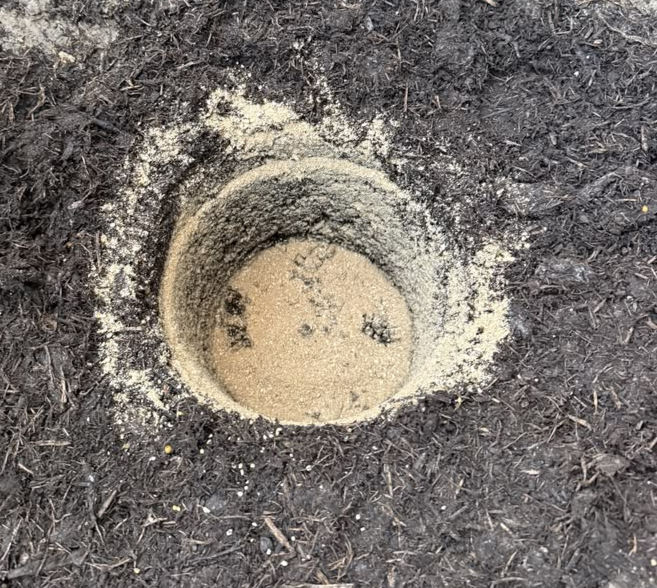
You can do this with any tree crop, it works the exact same way with Conker trees and multiple other species. It is by far the easiest way to mass produce trees in your own home. I will add a few reference images showing the development process down below.

Comments